


 Make an appointment
 Buy a gift card
 Find a branch
 Reload a gift card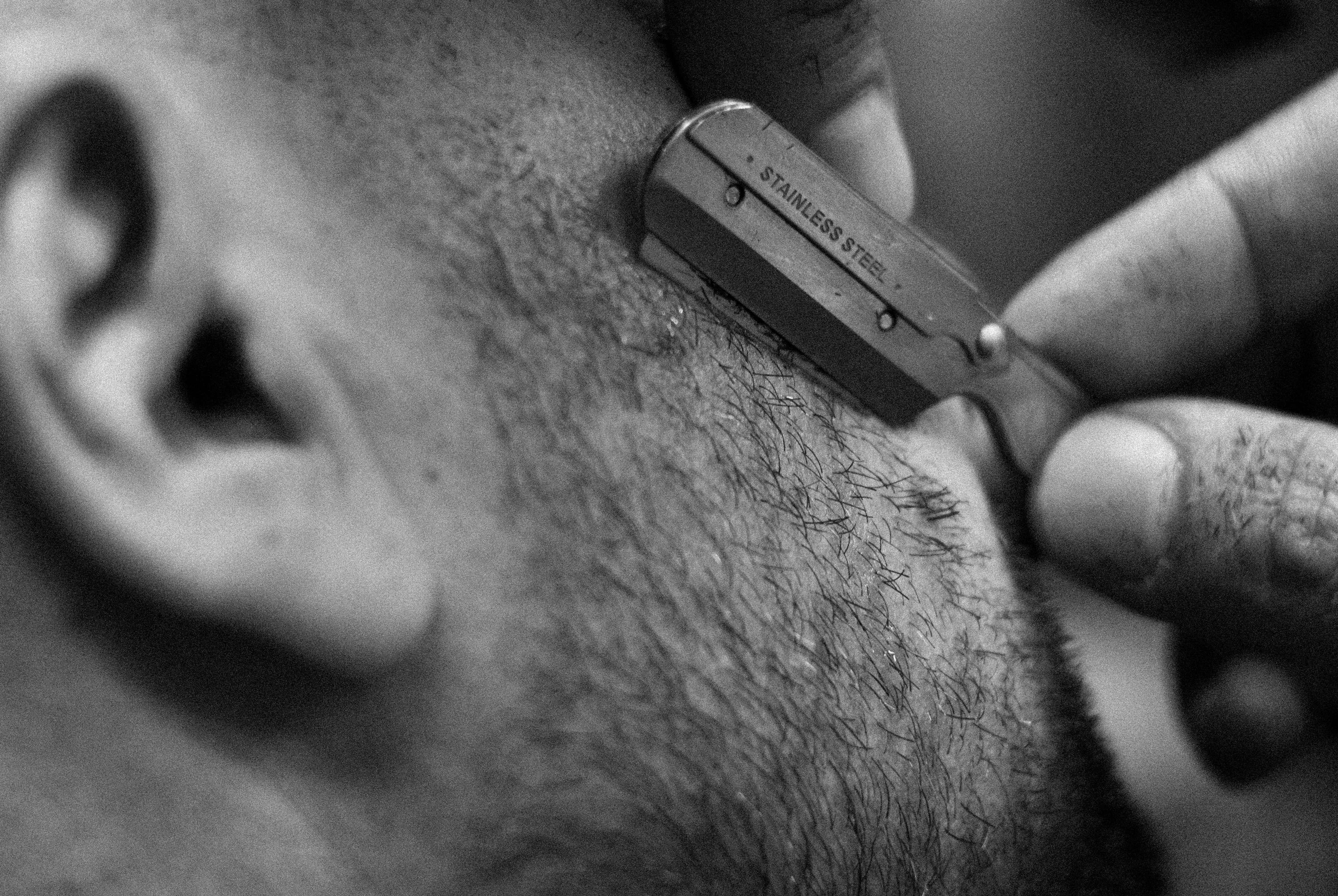
You've been shaving for years. Yet, almost every time, it ends the same way: redness on your neck, razor burn under your jaw, sometimes two or three pimples appearing the next morning. Razor burn, as it's called, is so common that many men end up believing it's unavoidable.
It's not unavoidable. In most cases, it's a matter of technique and products. Here's what causes these irritations, and how to avoid them for good.

What causes razor burn
Using the blade for too long
This is probably the number one cause, and the most ignored. A dull blade doesn't cut; it pulls and tears the hair instead of slicing it. Each pass over the skin with a worn blade creates friction, micro-abrasions, and triggers an inflammatory reaction. The result: redness, burning, sometimes pimples a few hours later.
How many times do you use your blade before changing it? If the answer is more than 5 to 7 shaves, it's probably too much.
Shaving without preparing the skin
Waking up, splashing cold water on your face, and attacking with the razor—that's exactly the kind of result we just described. Dry hair is stiff. Unprepared skin is taut. The blade resists instead of gliding.
A comfortable shave begins with softened skin: warm water, showering beforehand, or a hot towel on the face for a few minutes. Hair cuts two to three times more easily when it's well-moisturized.
Aerosol shaving cream
Aerosol foams and gels are convenient. They are also often loaded with alcohol, synthetic fragrances, and propellants that irritate the skin. Many men who complain of chronic irritation have been using this type of product for years without making the connection.
A well-formulated shaving cream or soap creates a denser lather, lubricates the skin better, and protects the hair during the cut. The difference is felt from the very first shave.

Too many passes with the razor
Going over the same area multiple times for a cleaner result is tempting. It's also a direct way to damage the skin. Each pass removes a thin layer of skin in addition to the hair. Two or three back-and-forths on the neck, and the skin barrier is compromised, bacteria enter more easily, and pimples follow.
This is where disposable razors with 3, 4, or 5 blades become a problem. The marketing logic is appealing: more blades, a cleaner shave in a single pass. In reality, each additional blade is one more pass over the skin. A 5-blade razor making a single pass is five consecutive passes over the exact same area. For sensitive skin, this is often too much. The irritation, redness, and pimples that seem to appear "for no reason" often have this cause.
A single-blade razor, safety razor, or straight razor offers better control over the angle and pressure, and allows the skin time to recover between passes. It requires a bit more technique, but the results for reactive skin are generally significantly better.
Shaving against the grain further exacerbates the problem. It pulls the hair more aggressively at the base, increases the risk of ingrown hairs, and multiplies micro-cuts, especially on the neck where hair rarely grows in a single direction.
Not applying anything after shaving
Aftershave is not a luxury. Shaving removes part of the skin's hydrolipidic barrier. Without proper care to close pores and calm inflammation, the skin remains vulnerable for several hours afterward. A cheap, alcohol-based aftershave that stings when applied is not a solution; it's often a source of additional irritation.

How to correct your routine, step by step
Prepare your face before starting
Shave after showering. Otherwise, place a warm, damp towel on your face for 2 to 3 minutes; this is what good barbers do. The hair opens up, the skin relaxes, the blade glides. It's that simple.
Choose a good shaving product
Forget the aerosol can. A quality shaving soap or cream creates a dense lather that truly lubricates the skin and protects the hair during the cut. Look for alcohol-free and fragrance-free formulas if you have sensitive skin.
Our selection of shaving creams and soaps to replace the aerosol can once and for all.
Change the blade regularly
A new blade cuts cleanly. After 5 to 7 shaves, depending on your hair type, it pulls more than it cuts. If you feel resistance or unusual heat during shaving, it's a sign that the blade needs to be changed.
Shave with the grain, at least for the first pass
Go with the direction of hair growth for the first pass. If you want a closer result, a second pass perpendicular to the grain is acceptable. Avoid going completely against the grain, especially on the neck, as that's where ingrown hairs and pimples appear first.
Apply a suitable aftershave
This is the step most often sabotaged by a bad product. A good aftershave balm closes pores, calms inflammation, and rehydrates the skin without stinging. If your usual aftershave stings strongly upon application, it's probably because it contains a lot of alcohol; this isn't a sign that it "disinfects well," it's a sign that it irritates.
Our aftershave balms and lotions to finish your shave without burning.
Use an alum block for cuts
An alum block is a natural astringent. Applied to a damp face after shaving, it tightens pores and stops small bleeds without alcohol or chemicals. It's an old barber's trick that really works.
Alum blocks — simple, effective, often forgotten.

Pimples after shaving: why they really happen
Post-shave pimples are not always ingrown hairs. Often, it's mild bacterial folliculitis: micro-cuts created by the blade allow bacteria to enter the follicles. A shared razor, a poorly rinsed shaving brush, or an expired cream can be enough to trigger this.
Basic steps to avoid this: clean blade changed regularly, shaving brush rinsed and dried after each use, never shave already irritated or inflamed skin.
If the pimples are persistent, painful, or worsening, a dermatologist can provide an accurate diagnosis. Chronic folliculitis can be treated, but not with shaving gel.
In summary: the irritation-free shaving checklist
| Step | What to do |
|---|---|
| Before | Skin moistened with warm water, 2–3 min minimum |
| Shaving product | Formulated cream or soap, alcohol-free |
| Blade | Changed every 5 to 7 shaves |
| Technique | With the grain, 1 to 2 passes max |
| After | Alcohol-free aftershave balm, closed pores |
| Optional | Alum block for small cuts |
Razor burn is not a permanent condition. Most of the time, changing two or three things in your routine is enough to solve the problem. If you're not sure where to start, our barbers are there for you, in the salon, we take the time to explain what truly makes a difference.


