


 Make an appointment
 Buy a gift card
 Find a branch
 Reload a gift card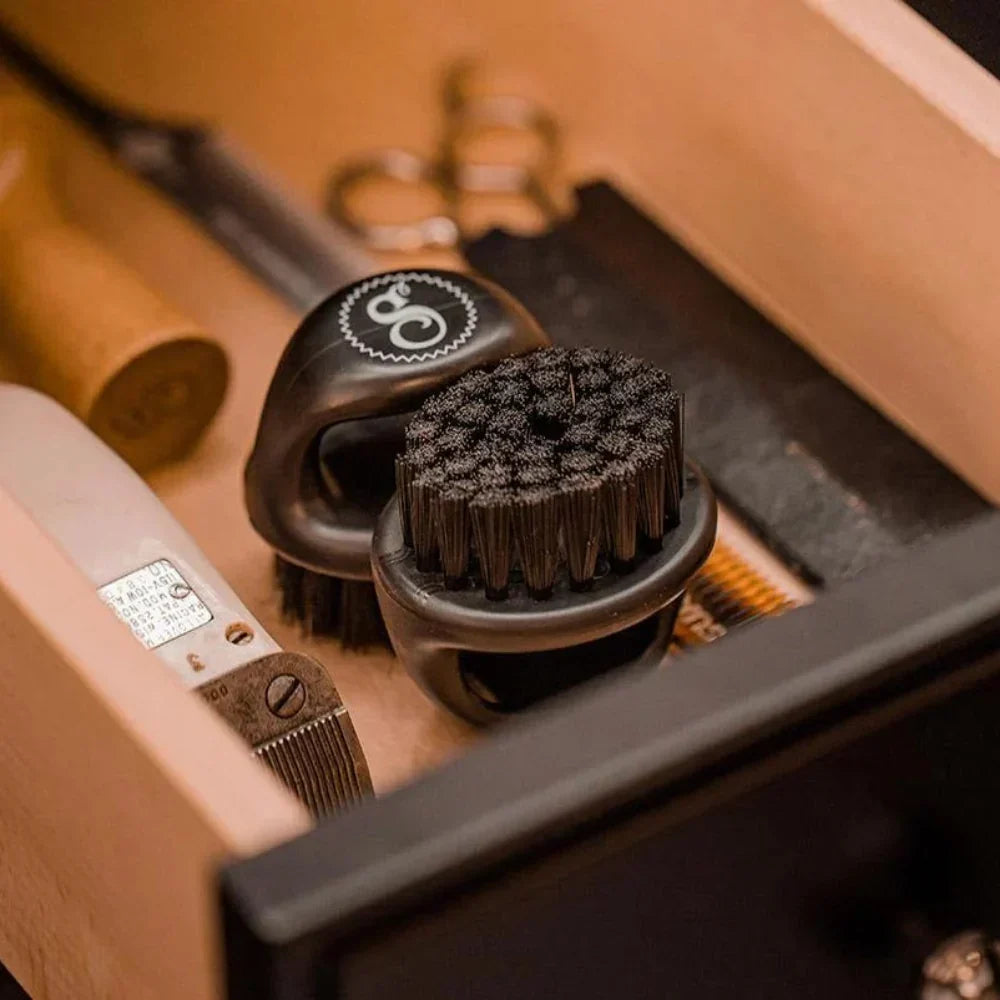
Boar bristle suits most beards because it's close in composition to human hair, while synthetic fibers remain the logical choice for vegan men or very thick beards. The right pick mostly comes down to your beard's texture and your personal values.

Why bristle type changes everything
A beard brush isn't just a style accessory. Used well, it spreads sebum, unclogs pores, and trains unruly hairs to grow in the right direction. But not all bristles do that job equally.
Boar bristle is rich in keratin, the same protein that makes up your hair and beard. That chemical kinship means it works with the hair fiber instead of against it. Synthetic fibers (nylon, plastic) don't have that natural affinity, but they make up for it with consistent stiffness and a manufacturing process that doesn't depend on any animal.
The advantages of a boar bristle brush
Boar bristle remains the benchmark for three concrete reasons.
First, it distributes sebum from root to tip. Past a certain beard length, your skin can't produce enough sebum to naturally hydrate the ends, leaving the beard dry and brittle. A boar bristle brush corrects that imbalance with every pass.
Second, it stimulates blood circulation on contact with the skin, which encourages denser growth. And because the bristles are soft yet firm, it lightly exfoliates the skin under the beard, reducing the risk of ingrown hairs for men with curly or thick beards.
This type of brush is especially useful for fine, brittle beards or ones prone to static. Daily use on dry hair is enough to see a difference within a few weeks.

The advantages of a synthetic fiber brush
A synthetic brush answers a different need. It's aimed at men who avoid animal-derived products on principle, those looking for a more affordable option, or those with a particularly dense, curly beard.
Manufacturers can shape synthetic tips into precise forms, which lets you brush both the top and underside of the beard in a single pass. Cleaning is also simpler: unlike boar bristle, which holds onto sebum and debris in its texture, synthetic fiber rinses quickly without losing effectiveness.
Some plant-fiber brushes, like those made from cactus fiber, come close to boar bristle performance while staying 100% vegan. They keep firm bristles that clean the beard and stimulate follicles, a solid compromise for anyone who wants to avoid animal hair without sacrificing stiffness.
What about horsehair?
A third, lesser-known option exists: horsehair. Harvesting it doesn't harm the animal, which makes it a popular choice in traditions that exclude pig and boar products. Horsehair brushes often blend in a few nylon strands for extra firmness, getting closer to the effectiveness of a boar bristle brush while remaining an ethical alternative.
How to choose based on your beard
The right choice depends on three things: your beard's length, the nature of your hair, and your personal values.
For a short to medium beard, a small firm-bristle brush is enough to style beard and mustache. For a medium to long beard, a larger, softer-bristle brush reaches the skin under the beard more easily and spreads sebum along the full length.

If your beard is curly or thick, boar bristle can struggle to penetrate deeply: a synthetic brush with stiffer tips, or a boar-and-nylon blend, will do a more thorough job. For sensitive or redness-prone skin, go with soft boar bristle rather than rigid synthetic fibers, which can irritate more.
Boar bristle does have one real limitation: its uneven edges can worsen split ends on an already damaged beard, and it holds onto dirt and residue more easily, which means more frequent, more careful cleaning. It's a trade-off worth knowing before making it your only brushing tool.
For a complete routine, a boar bristle brush from our collection pairs well with a beard comb to detangle before brushing, and with a beard oil to nourish the ends that the brush then spreads through.
How to use your beard brush properly
Whichever type you choose, one rule beats all the others: never brush a wet beard. Wet hair is fragile and breaks more easily under a brush's pressure, whether the bristles are natural or synthetic. Always pat your beard dry with a towel before brushing.
Then brush in the direction of growth, with firm but not rough strokes. If your beard is brittle, space out your brushing sessions rather than doing it daily, and rely on an oil or balm to strengthen the hair between brushings.
Frequently asked questions
Does a boar bristle brush work for all beard types?
It works for most beards, especially fine to medium ones. For very thick or curly beards, a synthetic brush or a boar-and-nylon blend can better reach through to the skin.
Do I need to choose between a brush and a beard comb?
No, the two play complementary roles. The comb detangles and styles, the brush spreads sebum and lightly exfoliates the skin. Many men use both in their routine.
Can I clean a boar bristle brush the same way as a synthetic one?
Boar bristle holds onto more sebum and residue within its structure and needs more careful cleaning. Synthetic fibers rinse more easily, without losing firmness after repeated washes.
Is a boar bristle brush a vegan choice?
No, it's made from animal-derived bristles. Synthetic fibers or cactus-fiber brushes remain the equivalent vegan options.
Whether you go with boar bristle or a synthetic fiber, the key is regular use on dry hair. Discover our full beard brush collection to find the model that suits your beard.


